Source context: Toray Composite Materials America — Carbon Fiber Terminology.
Carbon fiber is a thin, carbon-rich reinforcing filament, not automatically a finished plastic or structural component. Most rigid components described as “carbon fiber” are carbon-fiber-reinforced polymers (CFRP): filaments embedded in a matrix, then consolidated into a part. A loose tow or dry woven cloth, by contrast, is reinforcement—not yet a rigid composite. That difference matters because the fiber grade alone does not define a finished part’s strength, stiffness, surface or service temperature.
The wording can denote a filament, tow, dry cloth, prepreg, flat laminate or a finished part. Ask what the label refers to before comparing tensile strength, surface appearance or price. Before comparing material claims, establish which of these objects the description refers to.
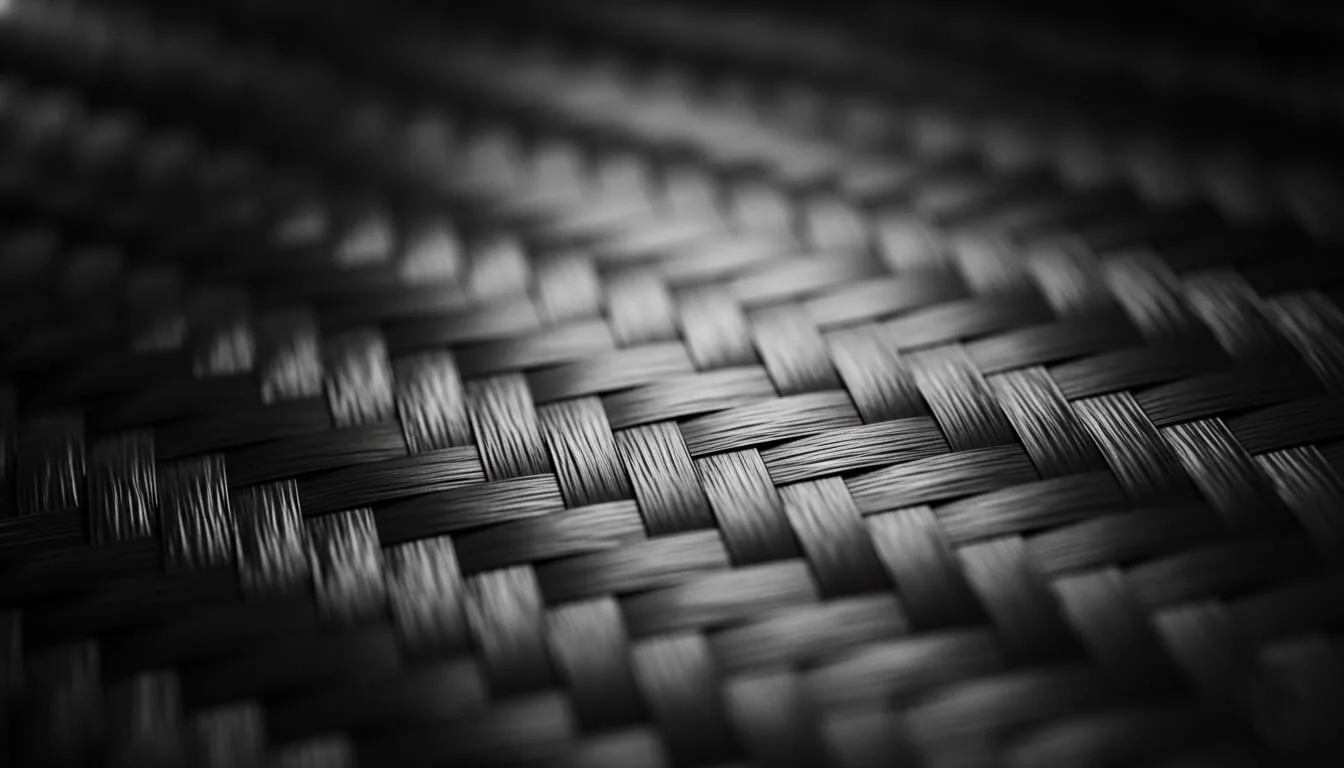
Four material forms that share the same name
| Form | What it physically is | What it does not establish |
|---|---|---|
| Carbon filament | A single fine fiber produced from a carbon-rich precursor | The properties of a structural laminate |
| Tow, tape or woven fabric | Many filaments assembled into bundles or a textile reinforcement | The matrix chemistry, cure condition or final thickness |
| Prepreg or resin-infused reinforcement | Fiber combined with an uncured or partially processed resin system | The properties of a consolidated and inspected part |
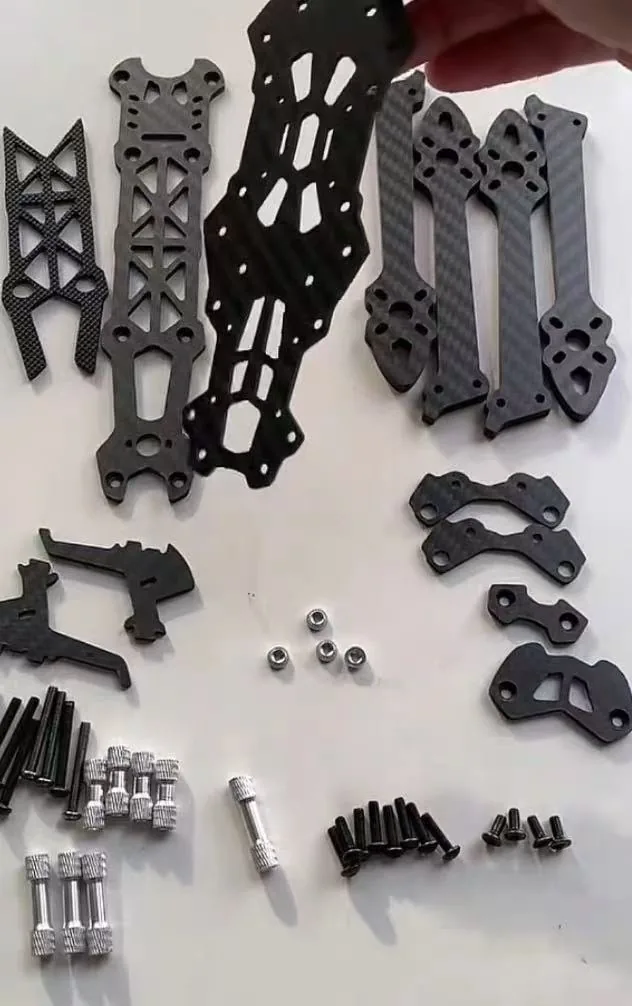
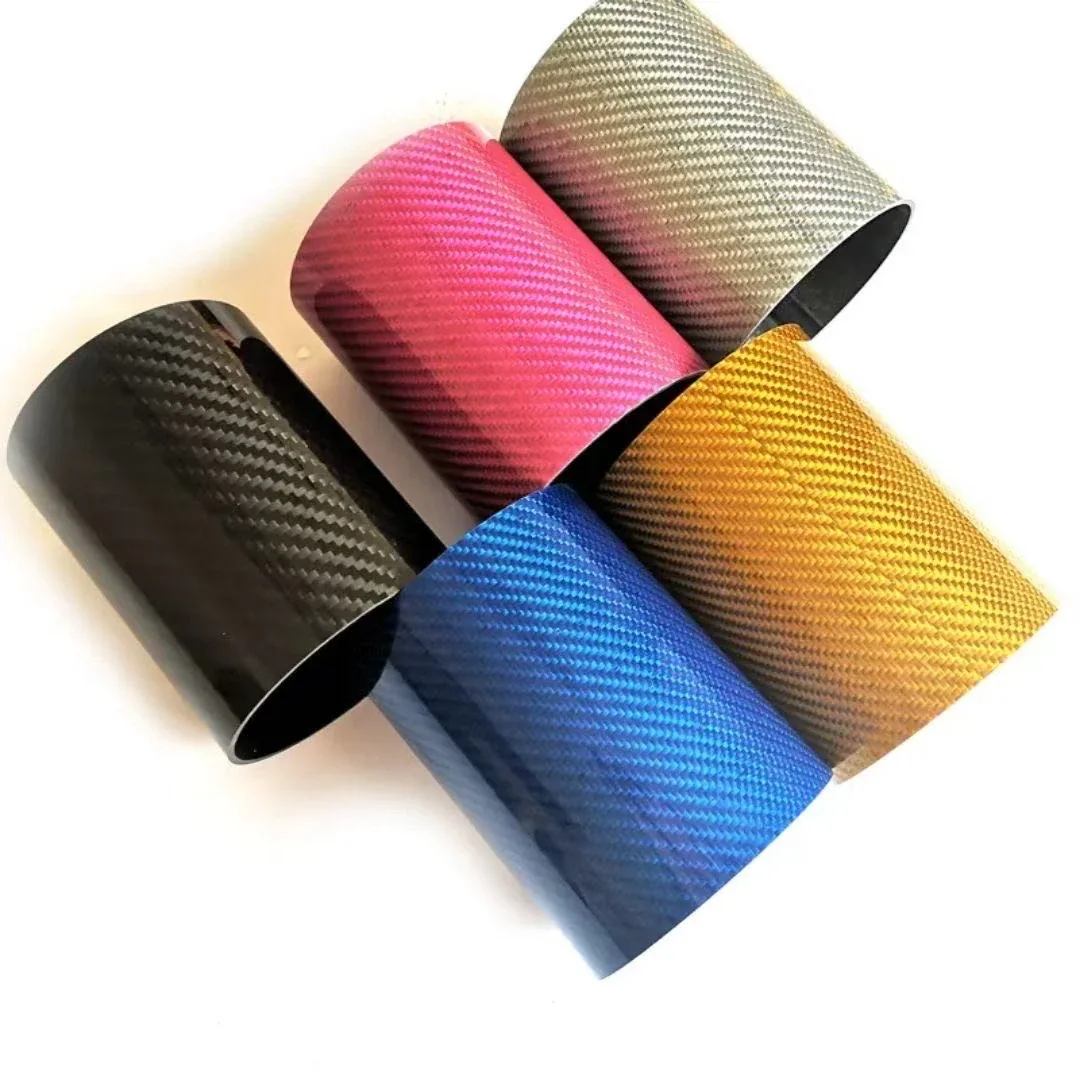
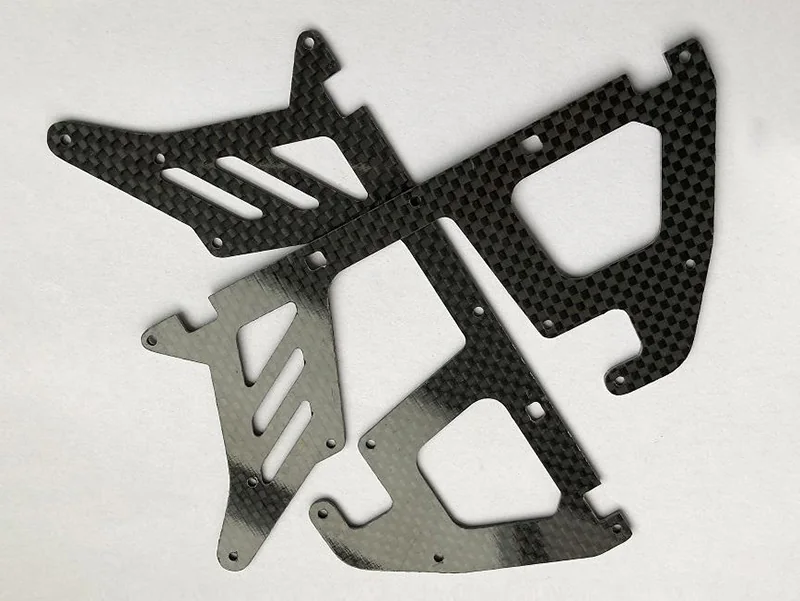
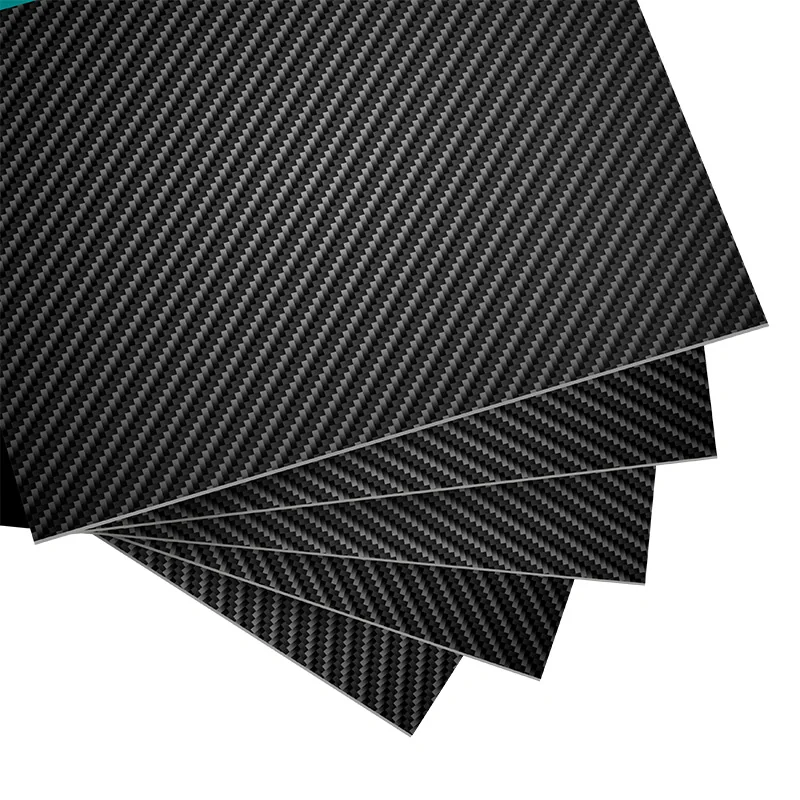
| Cured CFRP laminate or part | Carbon reinforcement held within a hardened matrix in a defined geometry | An identical result for every grade, layup or loading direction |
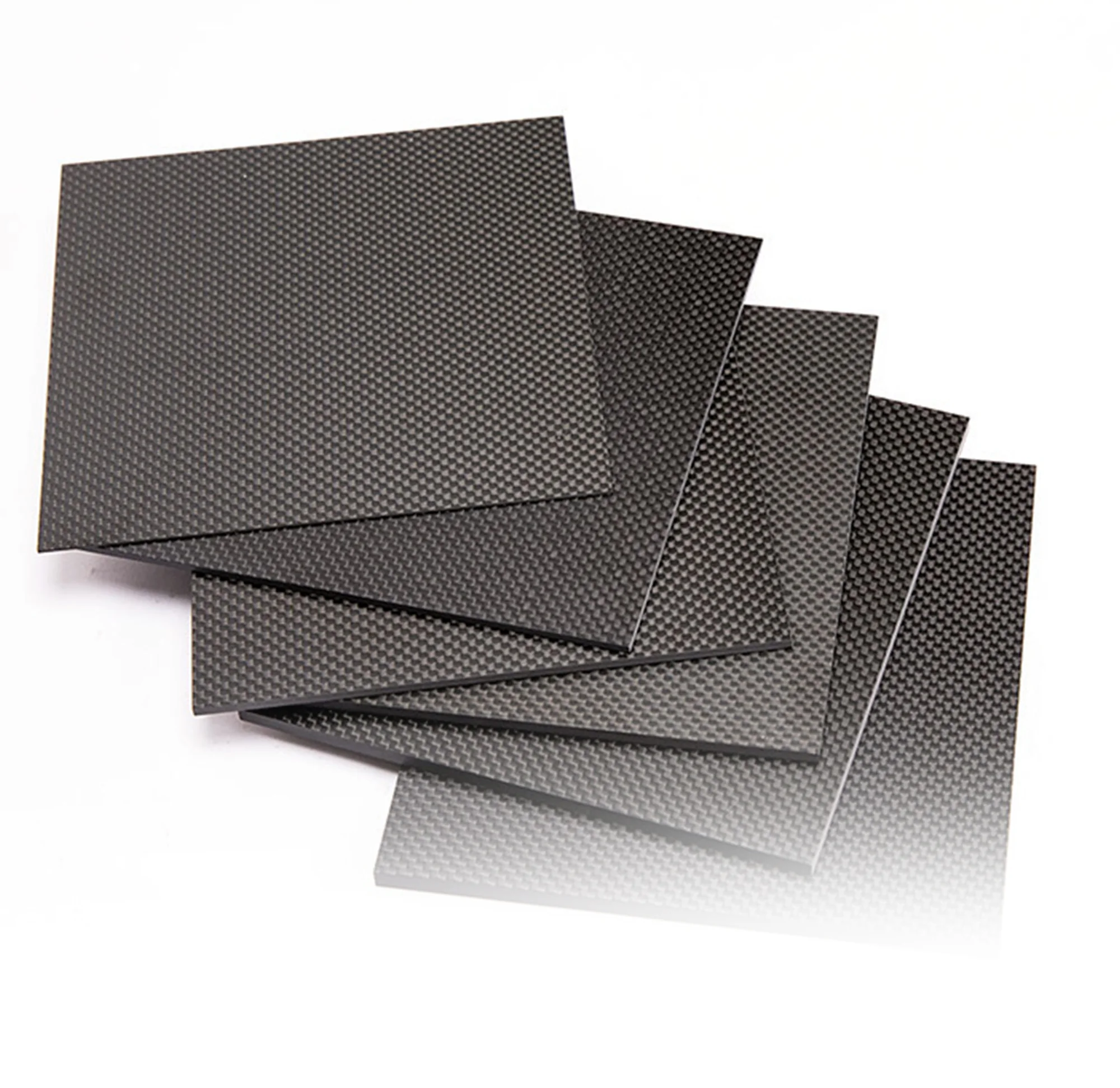
A tow refers to a bundle of filaments. A laminate generally contains layers, or plies, arranged to supply reinforcement in selected orientations. In everyday product listings these terms are sometimes collapsed into “carbon fiber.” For example, a requirement for a 2 mm cured panel cannot be satisfied by supplying 2 mm of dry fabric: the specified object is a laminate, not a textile. Thickness alone does not describe its fiber sequence or resin content.
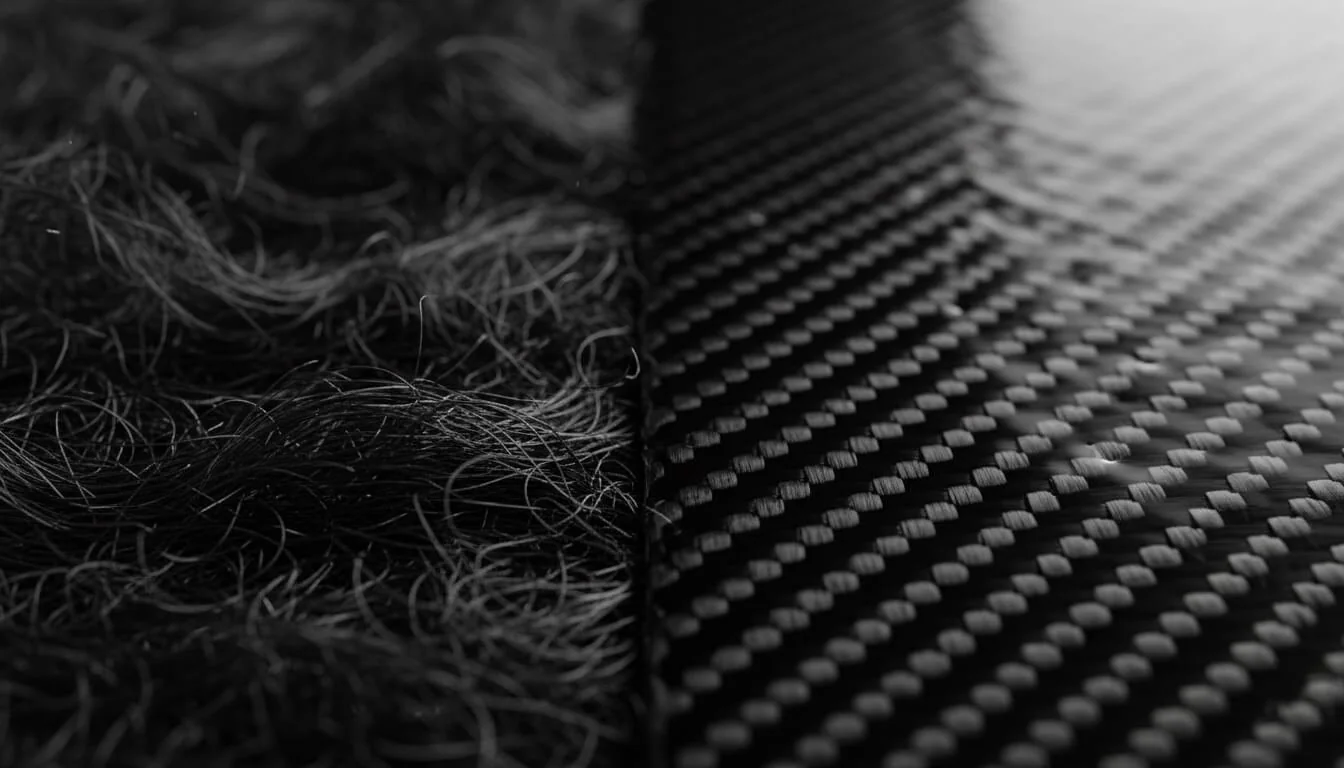
Why does the resin matter?
In a polymer-matrix composite, carbon fibers are the principal reinforcement. The surrounding resin binds them into the intended geometry, transfers load between fibers, helps protect the reinforcement and influences handling, temperature limits and damage behavior. Epoxy is a common example; it is not the only possible matrix.
The fiber–matrix interface matters as much as the labels. Surface treatment and sizing can affect how effectively the matrix bonds to reinforcement. A fiber that performs well in isolation does not guarantee a good laminate if impregnation, bonding, compaction or cure are unsuitable. Conversely, a well-processed laminate can be designed around the actual direction of expected loads instead of relying on an unspecified “carbon fiber” grade.
This is why fiber tensile data and finished-part test results answer different questions. A fiber datasheet describes the reinforcement under a stated test method; a laminate coupon reflects the layup and cure; a complete component additionally incorporates holes, edges, geometry and joints. These are three different levels of evidence.
Why carbon fiber can be stiff in one direction and less capable in another
A carbon filament has a preferred direction along its axis. When many fibers in a laminate align with the main load, they can carry that load efficiently. The same material system loaded across its fiber direction depends more heavily on the matrix and on the arrangement of other plies.
Consider a hypothetical flat panel: fibers oriented mainly lengthwise are positioned to resist a lengthwise pull. The same laminate may respond differently to a crosswise load; an alternative stacking sequence may improve a different load case. Holes, trimmed edges and bolted joints add local stress concentrations. That is why a nominal weave pattern or a single fiber tensile value cannot certify the panel.
Engineers call this anisotropy: the measured behavior changes with direction. It is not automatically a weakness. It is a design feature that demands a known layup and an appropriate load case. Neither a plain black weave appearance nor an unqualified “high modulus” label tells you how a finished component will respond to its actual loads.
What makes carbon fiber useful—and what limits it?
Carbon reinforcement can offer useful specific stiffness and strength when a structure is designed around its directional behavior. A composite can also be molded or layered into geometries that would require different fabrication methods in a metal. Those are design opportunities, not universal performance guarantees.
Several practical limitations need equal weight:
Impact and hidden damage. A laminate can show internal damage that is not obvious from surface appearance. Inspection depends on material and criticality, not color or gloss.
Temperature and chemicals. Carbon fiber itself and its polymer matrix have different environmental constraints. In a polymer composite, matrix temperature capability and exposure conditions can govern service limits.
Electrical behavior. Carbon fibers conduct electricity. Contact with other materials, insulation strategy and application-specific electrical requirements can matter.
Cost and manufacturing effort. Fiber format, tooling, labor, matrix processing, finishing and verification affect the complete part. A low mass per unit area of raw cloth says little about full-part cost. Generic claims about dramatic weight savings are not a substitute for a comparable design calculation.
A claim that carbon fiber is simply “stronger than steel” leaves out which grades, load directions, geometries and failure modes are being compared. Axial tensile strength and impact tolerance are not interchangeable metrics. A useful comparison is between two finished designs meeting the same service requirement, not two unrelated raw-material headline numbers.
What is carbon fiber made from?
Commercial carbon fibers are made by converting suitable precursor materials, commonly polyacrylonitrile (PAN) or certain pitches, through controlled thermal processing. The resulting filaments contain predominantly carbon. Fiber manufacture is separate from assembling those fibers with resin into composite products.
What starts as an organic precursor is no longer ordinary PAN plastic after its conversion into carbon-rich reinforcement. That explains why “made from a polymer” does not mean “identical to a polymer composite.” The stages of precursor stabilization, carbonization and part molding belong in a dedicated manufacturing-process explanation; this article focuses on what the resulting material is and how its forms differ.
A short specification check for engineers and sourcing teams
When a drawing, quotation request or materials list says “carbon fiber,” clarify the following before comparing alternatives:
- Which form is required? Dry fabric, prepreg, cured flat stock or a completed part?
- What is the engineering duty? Bending, torsion, tensile loading, dimensional stability, cosmetic finish or a combination?
- What is specified about the laminate? Fiber orientation, reinforcement format, matrix system and nominal geometry may all matter.
- How will suitability be verified? Decide whether the question needs a supplier datasheet, a controlled laminate schedule, a dimensional record or a part-specific performance test.
- Which conditions are critical? Temperature, chemical exposure, impact, joints, finish and downstream machining can change the choice.
For a cosmetic panel, finish and edge detail may dominate the initial conversation; for a load-bearing bracket, load direction, joint design and inspection evidence take priority. The point is not to demand every parameter on every project. It is to identify which inputs actually govern the intended use instead of treating “carbon fiber” as a complete specification.
Frequently asked questions
Is carbon fiber the same thing as CFRP?
Not precisely. Carbon fiber is the reinforcement; CFRP is a composite that contains carbon fiber within a polymer matrix. In general conversation, “carbon fiber” may refer to either. A controlled drawing or test report should make the intended form clear.
Does carbon fiber always contain epoxy?
No. Bare carbon filament or dry fabric does not necessarily contain a cured polymer matrix, and finished composites can use different resin systems. Epoxy is common in many CFRP applications but should not be assumed for an unspecified part.
Is carbon fiber a metal or a type of plastic?
The filament is not a metal component or a conventional molded polymer item; a CFRP laminate is a distinct composite engineered from reinforcement plus matrix. When carbon fiber is combined with a polymer resin, the resulting CFRP is a fiber-reinforced polymer composite; its constituents have different functions.
Why can two parts made from carbon fiber behave differently?
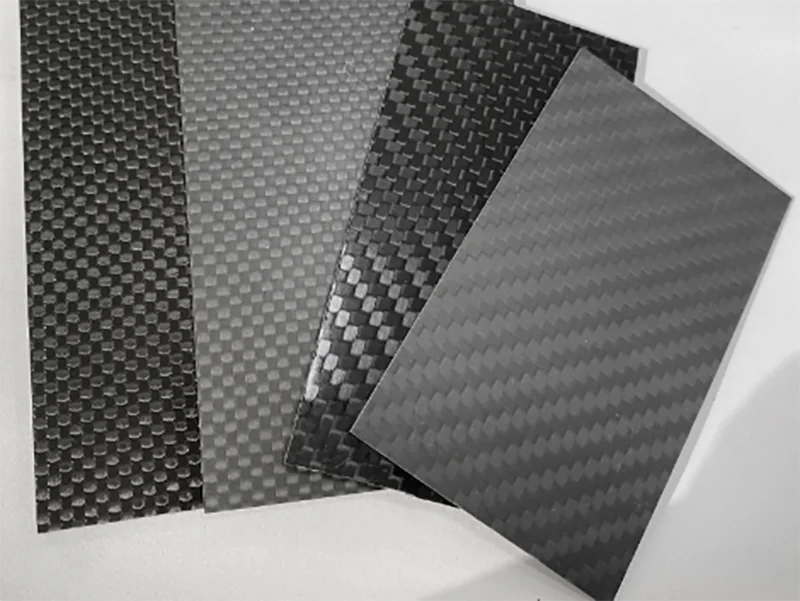
Fiber type, orientation, resin, reinforcement fraction, processing, geometry and loading direction can differ. Identical-looking woven surfaces do not prove identical internal laminates or results.
Can the fiber grade by itself confirm whether a part is suitable?
No. Grade data describes a constituent. Part suitability also depends on the design, manufacturing condition and the test or analysis appropriate to the application.
From the material definition to a project requirement
Once you can identify reinforcement form, matrix expectation, geometry and duty, review the appropriate finished-product family or prepare a drawing-led manufacturing brief. This transition does not assume any particular stock grade or verified product rating. View Related Product / Capability to continue that evaluation when the corresponding catalog and service destinations are verified.
Related technical guides: Types of Carbon Fiber · How Carbon Fiber Is Made.
References
- Toray Composite Materials America — Carbon Fiber Terminology
- CompositesWorld — Materials & Processes: Composites Fibers and Resins
- Avient — Carbon Fiber Composites
- Fabrication and Properties of Carbon Fibers — Materials
Explore carbon fiber products · Custom manufacturing · Back to Resources