Custom Cut Carbon Fiber Sheet Service

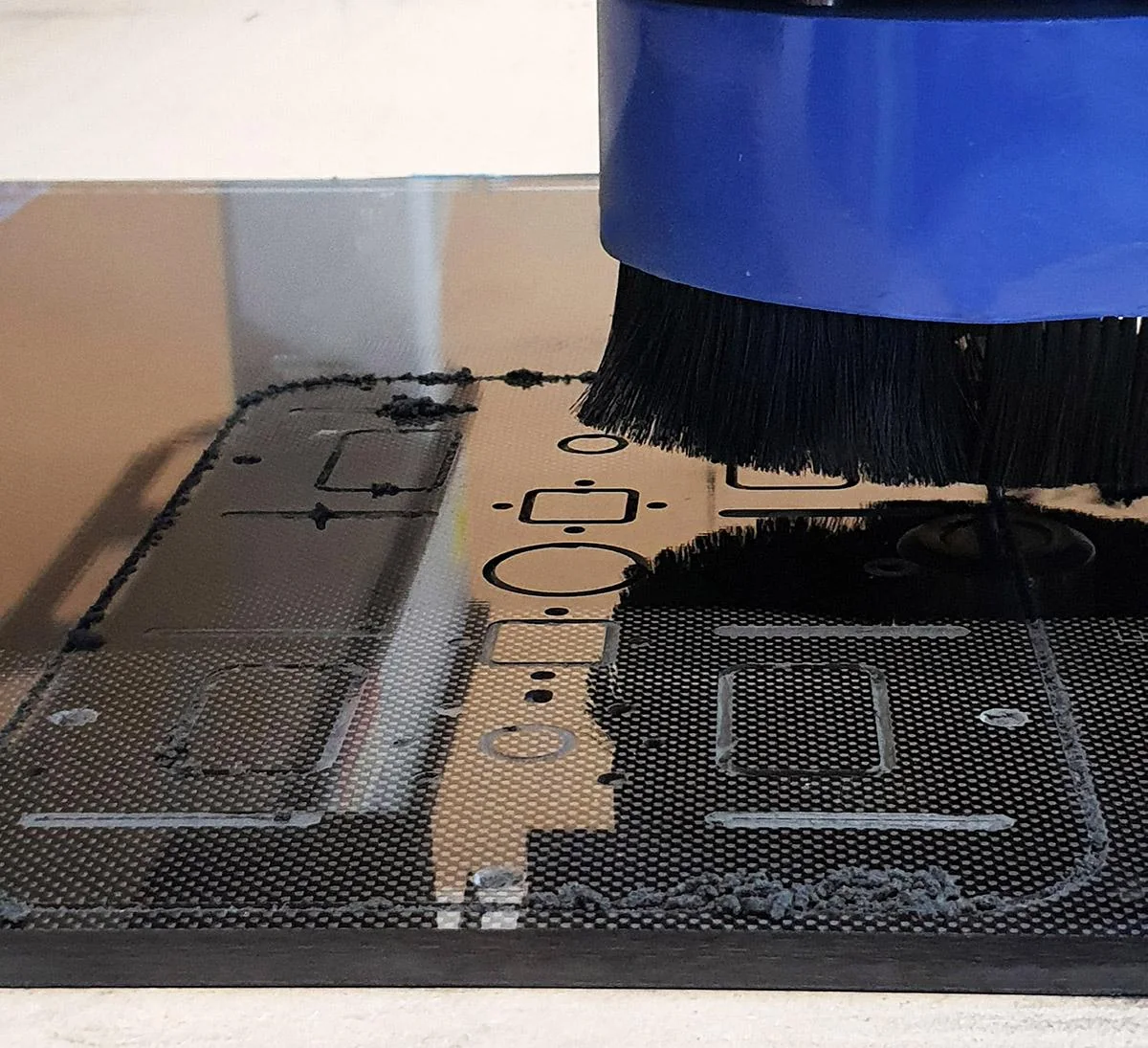
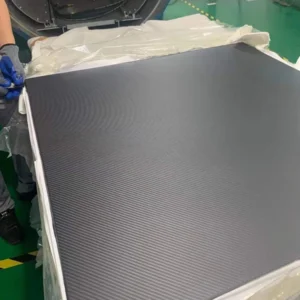
A custom cut carbon fiber sheet request concerns a specific flat-laminate shape, with its dimensions, cut features and delivered condition defined by the buyer. This differs both from purchasing an uncut stock panel and from evaluating a general-purpose machining service. Treat the starting laminate and the finished profile as two connected specifications, then define the inspection condition of the delivered piece.
Description
A custom cut carbon fiber sheet request concerns a specific flat-laminate shape, with its dimensions, cut features and delivered condition defined by the buyer. This differs both from purchasing an uncut stock panel and from evaluating a general-purpose machining service. Treat the starting laminate and the finished profile as two connected specifications, then define the inspection condition of the delivered piece.
This page organizes the information needed for a drawing-based sheet or plate enquiry. Confirm any available stock, proposed cutting method, feature limits, achievable dimensions, surface requirements and delivery terms for the individual drawing; this planning page alone proves none of them.
Start with the sheet, then define the cut
A carbon-fiber sheet is not specified completely by a photograph of its woven face. Reinforcement architecture, fiber orientation, resin, laminate thickness and any core layers can change how a panel behaves. Ask which of these requirements are fixed by your design and which remain open to material review.
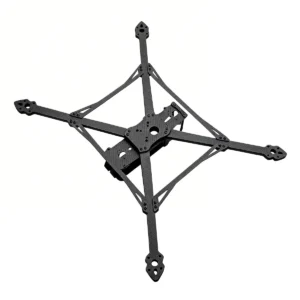
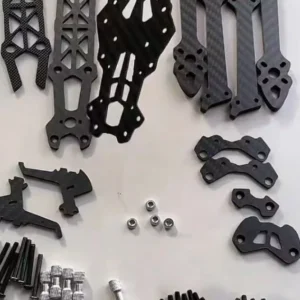
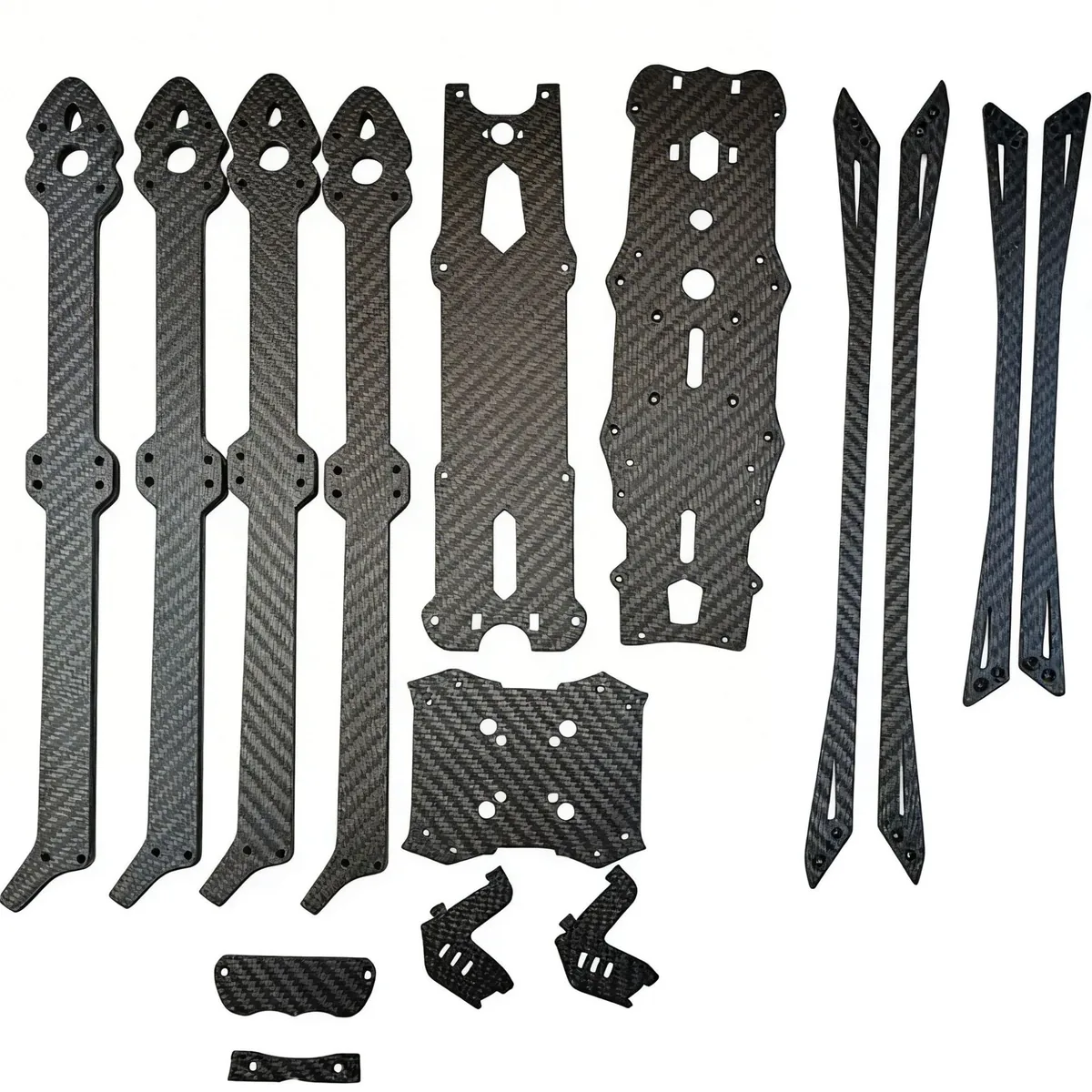
A flat sheet can be ordered as a blank, while a custom-cut sheet may also need outline trimming, internal openings, hole patterns, countersinks or edge finishing. When the intended component must attach to another part, the relative position of holes and datum features often matters more than a non-critical outer contour.
| Buyer input | Describe it in the enquiry | Why it affects the finished piece |
|---|---|---|
| Product purpose | Mounting plate, support panel, visual face, structural insert or another defined role. | Makes material and inspection questions relevant to the application. |
| Sheet construction | Known fiber/resin/layup, nominal thickness, visible surface or requirements still open. | A similar-looking weave does not necessarily mean an equivalent laminate. |
| Finished overall size | Units, outside dimensions and whether the drawing calls for one piece or nested pieces. | Distinguishes the net cut result from the size of the starting blank. |
| Cut geometry | Latest drawing revision, profile, holes, slots, radii and any countersinks. | Determines where geometry, tooling and edge feasibility need review. |
| Critical interfaces | Hole-to-hole position, mating face, orientation, assembly clearance and true functional dimensions. | Helps identify which dimensions need special attention. |
| Appearance and edge | Which face is visible, weave direction if important, required edge condition and finish expectations. | Avoids confusing a rough cut blank with a cosmetically finished component. |
| Quantity and documentation | Prototype count, first lot, expected repeats, inspection records if needed. | Allows a project-specific scope discussion without assuming fixed setup or price. |
Specify whether your expected deliverable is an outline-cut blank, a finished profile with holes, or a part with assembly-ready edges. Even a completed outside profile may need separate acceptance for holes, bonding interfaces and cosmetic finish.
Drawing package for CNC cutting a carbon fiber sheet
A useful enquiry identifies the controlled 2D profile and a dimensioned drawing that defines the intended output. Supply a 3D model when it resolves countersink depth, insert geometry, face orientation or mating-assembly detail not clear in 2D. DXF, STEP and PDF are common reference formats, not a claim that the CFRPWorks site currently accepts those files. Confirm the recipient and authorized transfer method before sharing designs.
Keep the part number, revision and units consistent across files. If an existing sketch is only approximate, mark it as a concept and identify the dimensions requiring clarification. Replace vague instructions such as “all edges clean” with a visual acceptance standard, fiber/edge condition, requested seal or treatment, and any critical-contact inspection. The agreed inspection method matters as much as the adjective.
Features that deserve a separate feasibility question
- Small inside corners: A sharp CAD corner does not automatically translate to every physical cutting route. Ask about tool or process constraints before treating the shape as released.
- Holes near edges: Distance from an opening to the sheet edge, fiber orientation and load path may influence design and allowable processing. Do not apply generic numeric rules without a qualified material and part review.
- Narrow slots or thin webs: Clarify strength/handling and dimensional requirements; avoid assuming the same accuracy as an open external outline.
- Exposed laminate edges: Cutting may cause fraying, chipping or delamination if the method, support and finish are not matched to the laminate. Ask for proposed edge acceptance criteria rather than a blanket flawless-edge promise.
- Visible woven faces: Specify face orientation and whether the decorative pattern has to align across multiple pieces. Surface appearance alone does not establish mechanical properties.
These are questions for drawing review. They are not instructions to operate machinery or a statement that CFRPWorks owns a particular cutter.
Choosing a processing route without assuming the equipment
CNC cutting carbon fiber sheet is a commercial request for a cut output; the words do not settle whether a specific router, cutting head, abrasive-waterjet process or other method is appropriate. Supplier equipment and qualified material selections vary, so request confirmation of the actual processing route. Cut quality also depends on laminate construction, fixturing, geometry and post-processing.
Compare potential processes against the drawing: critical features, acceptable edges, material-specific validation and the samples or records needed for buyer approval. Do not treat a third-party provider’s published maximum sheet size, cutting speed, tolerances or turnaround as an industry-wide promise. Ask for the processing route and achievable feature limits to be confirmed for your actual drawing.
Stock sheet, custom-cut sheet or broader machining service?
| Your purchasing need | Relevant scope | What to provide first |
|---|---|---|
| Flat panel with no customer-specific cut profile | General carbon-fiber sheet/plate sourcing. | Material construction, sheet size, nominal thickness and quantity. |
| Flat panel cut to an outline, holes or slots | Drawing-specific custom-cut sheet/plate sourcing. | Sheet selection, released 2D geometry, critical edges/features, lot quantities. |
| Multiple machined composite components or operations beyond one sheet family | General carbon-fiber machining service evaluation. | Part drawings, operations, interfaces, material and acceptance needs. |
The scope here is a physical sheet/plate cut to a defined profile, not a generic manufacturing services landing page. If the real objective is a fully assembled molded product or general engineering services, describe that scope instead of forcing it into a cut-sheet enquiry.
How to evaluate the first cut-piece sample
Before approving a part, identify the drawing revision and material construction the sample represents. Inspect dimensions that influence assembly, such as hole locations and mating boundaries, rather than relying solely on an overall length-and-width measurement. For appearance-sensitive parts, record which face, weave orientation and exposed edges define acceptance.
Ask whether finishing, cleaning, edge treatment and protective packaging are inside the quotation. A sample made from a substitute sheet or different process may not establish equivalence to the intended repeat-production part; material or process changes should be reviewed against the acceptance criteria.
Custom-cut carbon-fiber sheet FAQs
Can I request a complex outline instead of a rectangle?
A drawing can define curves, slots or holes, but feasibility depends on the laminate, cut process, feature size and acceptable edge quality. A supplier needs to confirm the specific geometry before a capability or price commitment.
Is it enough to specify sheet thickness and weave pattern?
Not when the part has functional requirements. Clarify the laminate architecture, resin, thickness, loading environment and any required structural evidence. A woven appearance does not uniquely define strength or stiffness.
What if I have a DXF profile but no 3D model?
A dimensioned 2D file can describe a flat outline. Add a controlled drawing showing thickness, revision, critical dimensions and hole/edge requirements. Check which file formats the actual receiving party supports before sending controlled files.
Does CNC cutting automatically guarantee a tight tolerance?
No. Dimensional capability depends on the cut process, equipment, material, geometry, fixturing and method of inspection. Mark the dimensions critical to your use and request a project-specific achievable tolerance.
Will every cut edge be ready to assemble?
Not necessarily. Define acceptable fiber condition, visual finish and any edge sealing or post-processing. Those operations and their acceptance criteria must be agreed within the project scope.
Do you offer a fixed size, minimum order or production lead time?
Available sizes, minimum order quantity, pricing, and lead time are confirmed against the specific sheet construction, drawing, quantity, finishing requirements, and delivery scope in your enquiry. These commercial terms are quoted for the actual configuration rather than presented as universal values.
Upload Drawing / Request Quote
Prepare the latest profile and drawing revision, material/thickness requirements, finished outline and holes, sample and repeat quantities, edge/appearance criteria and your preferred schedule. Identify any critical inspection documents you need. Confirm the approved inquiry and file-transfer channel before sending proprietary design files; the receiving/upload service and actual cut-sheet availability must be verified before an order can be accepted.
Next step for your project
Use the inquiry form above to send your drawing, quantity, material or finish requirements, and the acceptance points that matter to your project.
Start Your RFQ Contact CFRPWorks