Source context: Japan Carbon Fiber Manufacturers Association — Carbon Fiber Types.
There is no single list of “types of carbon fiber” that tells an engineer everything about a finished part. The phrase can describe the starting precursor, the fiber’s mechanical grade, or the physical arrangement in which it is supplied. The resin system and finished laminate design form a fourth, independent layer of specification; they are not another synonym for fiber type.
For example, high-modulus PAN fiber, 12K tow, and 2×2 twill weave may each be valid descriptors, but they answer different questions. None alone establishes a cured panel’s tested stiffness, impact response or suitability for a particular drawing.
Start with the classification question
| Classification axis | Examples | Answers this question | Does not establish |
|---|---|---|---|
| Precursor chemistry | PAN-based, pitch-based | What precursor family was converted into the carbon reinforcement? | The exact grade, weave or performance of a part |
| Fiber performance grade | Standard, intermediate or high modulus; producer-specific high-strength grades | How is an individual fiber marketed or characterized on a datasheet? | The reinforcement architecture or final laminate result |
| Physical reinforcement form | Filament tow, unidirectional tape, woven fabric, chopped fiber | How are filaments arranged and supplied for manufacture? | The fiber grade, resin system or qualified structure |
| Finished composite configuration | Fiber type plus matrix, layup and processing | What material construction is being designed or tested? | Automatic equivalence to any other carbon-fiber product |
An engineer asking for a ‘type’ should first say whether the question concerns precursor, fiber datasheet, physical fabric or finished laminate. Otherwise the comparison has no common denominator. A woven cloth cannot be compared directly with a tensile-modulus label as if both were competing grades.
1. Types by precursor: PAN and pitch
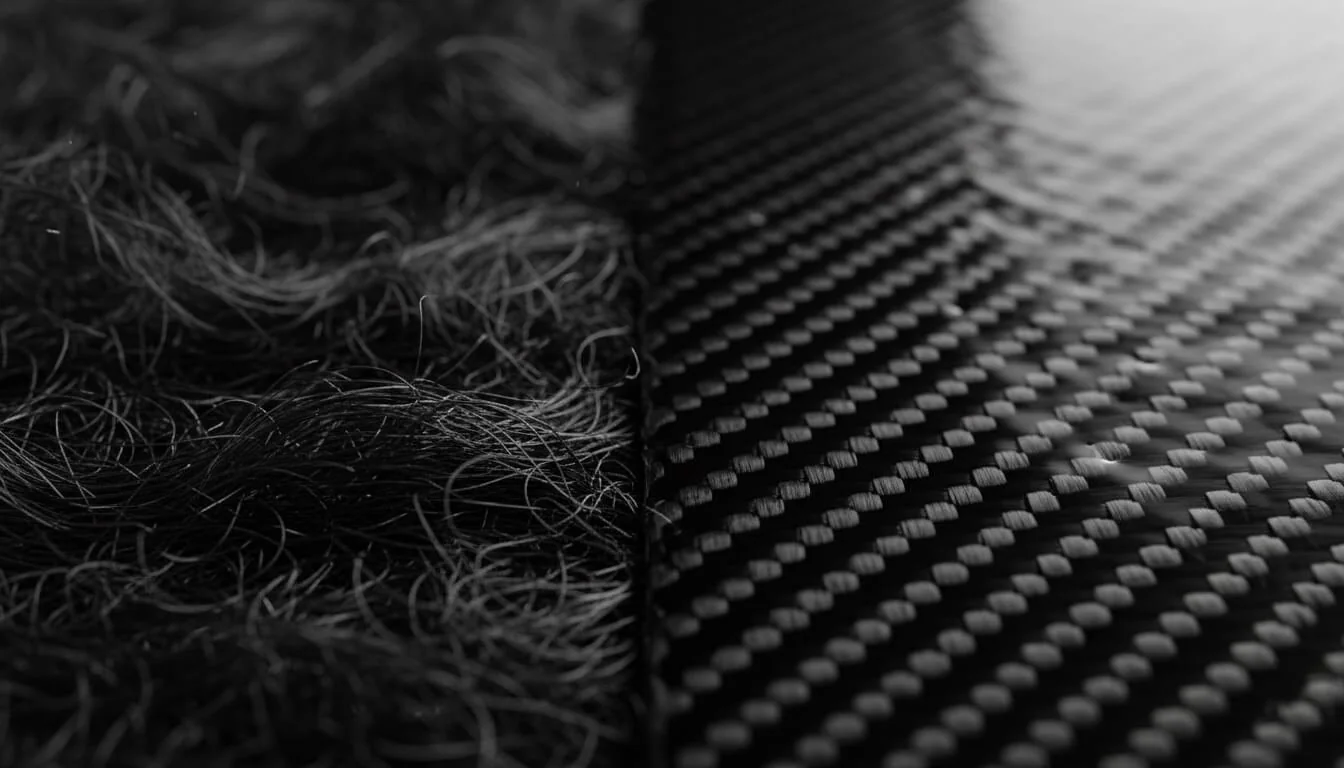
Carbon fibers originate from precursor materials converted into carbon-rich filaments. Polyacrylonitrile, abbreviated PAN, is an established route for many structural carbon fibers. Pitch-based fibers are another family, including grades designed for particular stiffness or thermal behavior. Precursor chemistry can influence the design space, but exact properties still need to be taken from the specific fiber grade and its test data.
Precursor origin provides a useful technical context, but it is not a shortcut to selecting a finished composite. A product may use a PAN-derived fiber and still require precise grade, filament format, matrix and test documentation. Likewise, a pitch-based label cannot establish thermal conductivity, compressive behavior or any other application-specific outcome without a relevant grade and composite measurement.
A supplier’s datasheet is the appropriate place to check the actual named grade and its measurement basis. The detailed conversion of precursor to filament is a separate process topic.
2. Types by fiber performance: strength and modulus are not synonyms
Manufacturers often group continuous carbon-fiber product lines by tensile modulus, a measure of stiffness in tension. You may see standard-modulus, intermediate-modulus and high-modulus categories. Other designations emphasize tensile strength or a balance of measured properties.
Two common mistakes follow:
- “High modulus” does not automatically mean highest tensile strength. Modulus describes the relationship between stress and strain in the relevant range; strength describes the stress reached before failure under the stated test.
- A fiber datasheet does not certify a finished laminate. Part stiffness and failure behavior also depend on the matrix, fiber orientation, processing, defects, geometry and load case.
Grade bands and naming conventions are not interchangeable across manufacturers. A branded fiber designation identifies a manufacturer’s product family or grade, not a universal class shared among all producers. Generic labels such as ‘high modulus’ should be checked against the producer’s stated test method.
What about T300, T700 and T800?
Codes such as these occur in particular producers’ carbon-fiber families and can be useful references when linked to an authentic grade-specific datasheet. The code by itself does not tell you how a finished panel was laid up, what resin it contains, how it was cured or which qualification tests it passed. The phrase ‘T700 quality’ is particularly incomplete when the fiber producer, exact grade suffix, resin, laminate schedule and part-level evidence are absent.
For a genuine comparison, request the producer and full grade designation, product-form information, relevant measurement methods and the laminate specification. Even two sheets with the same named fiber can be designed for different tasks.
3. Types by fiber arrangement: what are tow, UD and woven fabrics?
The reinforcement can arrive as continuous fibers or in different textile forms. This changes how the material can be laid into a part and how its fibers align with expected loads.
Tow and K-count
A tow is a bundle of continuous filaments. Labels such as 3K and 12K conventionally describe approximate filament counts of 3,000 and 12,000 respectively. They do not denote a tensile-strength grade. K-count influences how a bundle can be spread, woven or processed, but the heavier-looking fabric is not necessarily the better structure. Compare fiber datasheets and laminate requirements separately.
Unidirectional reinforcement
In unidirectional (UD) tape or fabric, fibers primarily run in one direction. A designer may place multiple UD plies at different angles to meet several load cases. A UD ply is directionally reinforced, while a stack of differently oriented UD plies can be designed for multiple load directions. The finished stacking sequence, not the label ‘UD’, controls that comparison.
Woven fabric
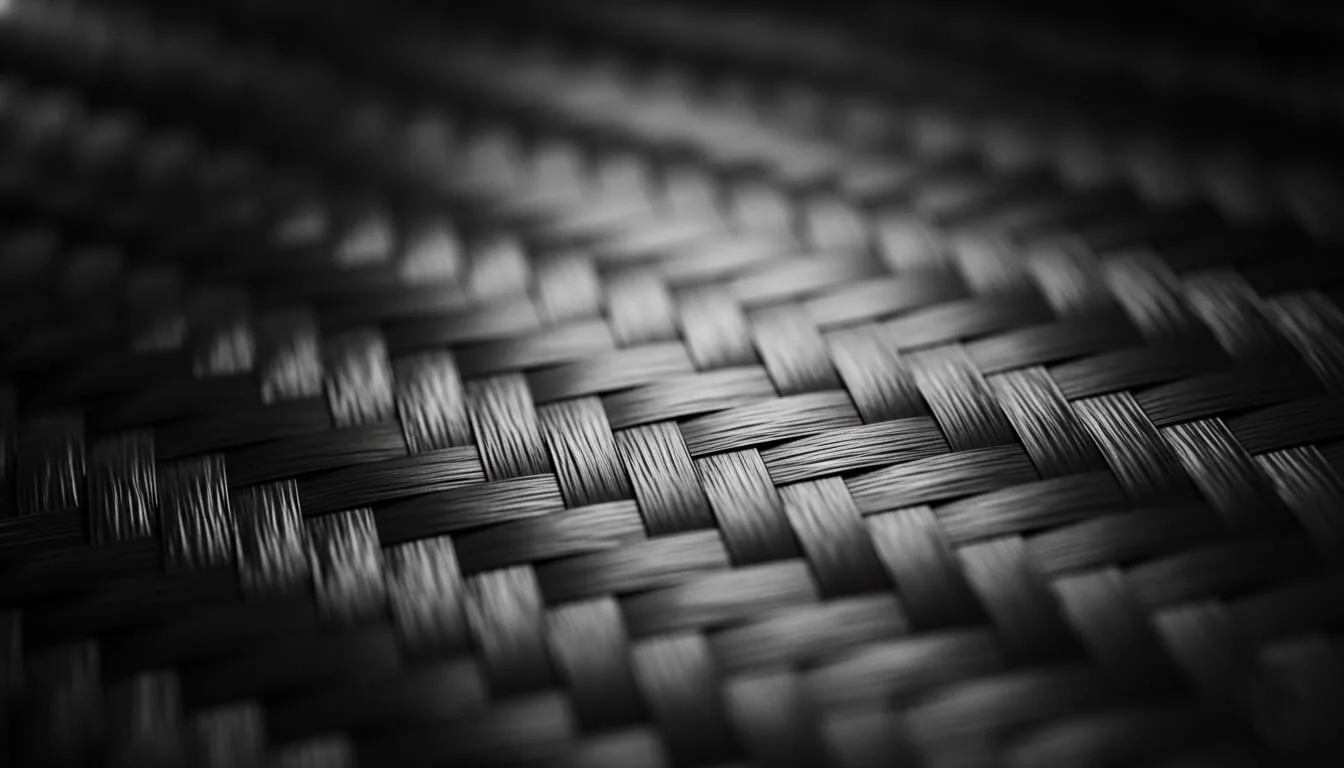
Woven reinforcement interlaces sets of fibers, creating familiar surface patterns:
| Fabric description | What it tells you | Selection caution |
|---|---|---|
| Plain weave | A frequent over-under interlacement | Drape, thickness and crimp vary with fabric construction |
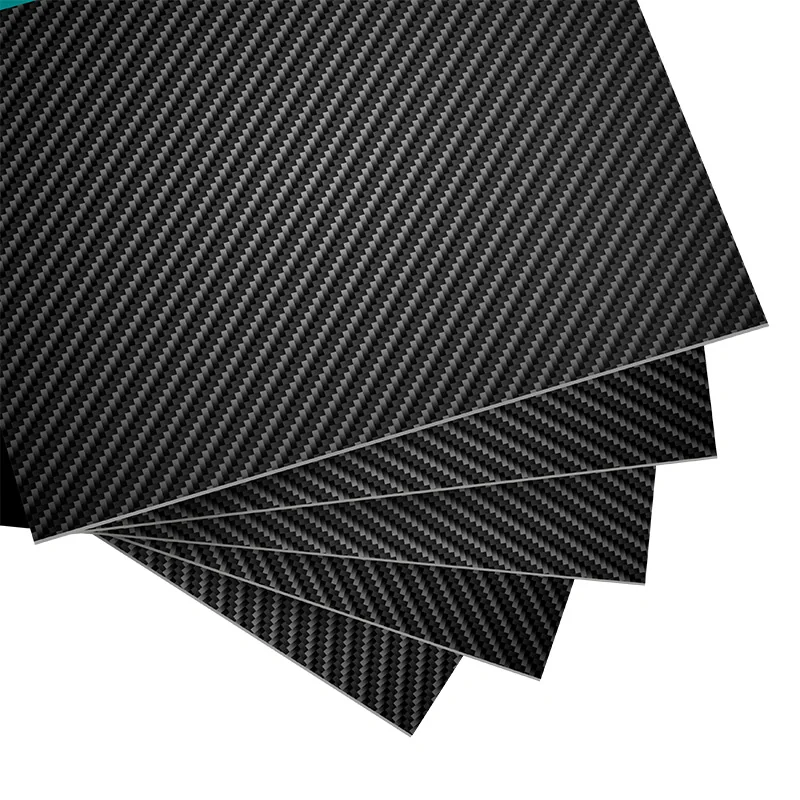
| Twill weave | A staggered interlacement often seen as a diagonal pattern | The visible pattern does not prove structural grade |
| Satin or other weaves | Different interlacement distribution | Handling and drapability depend on the specific textile |
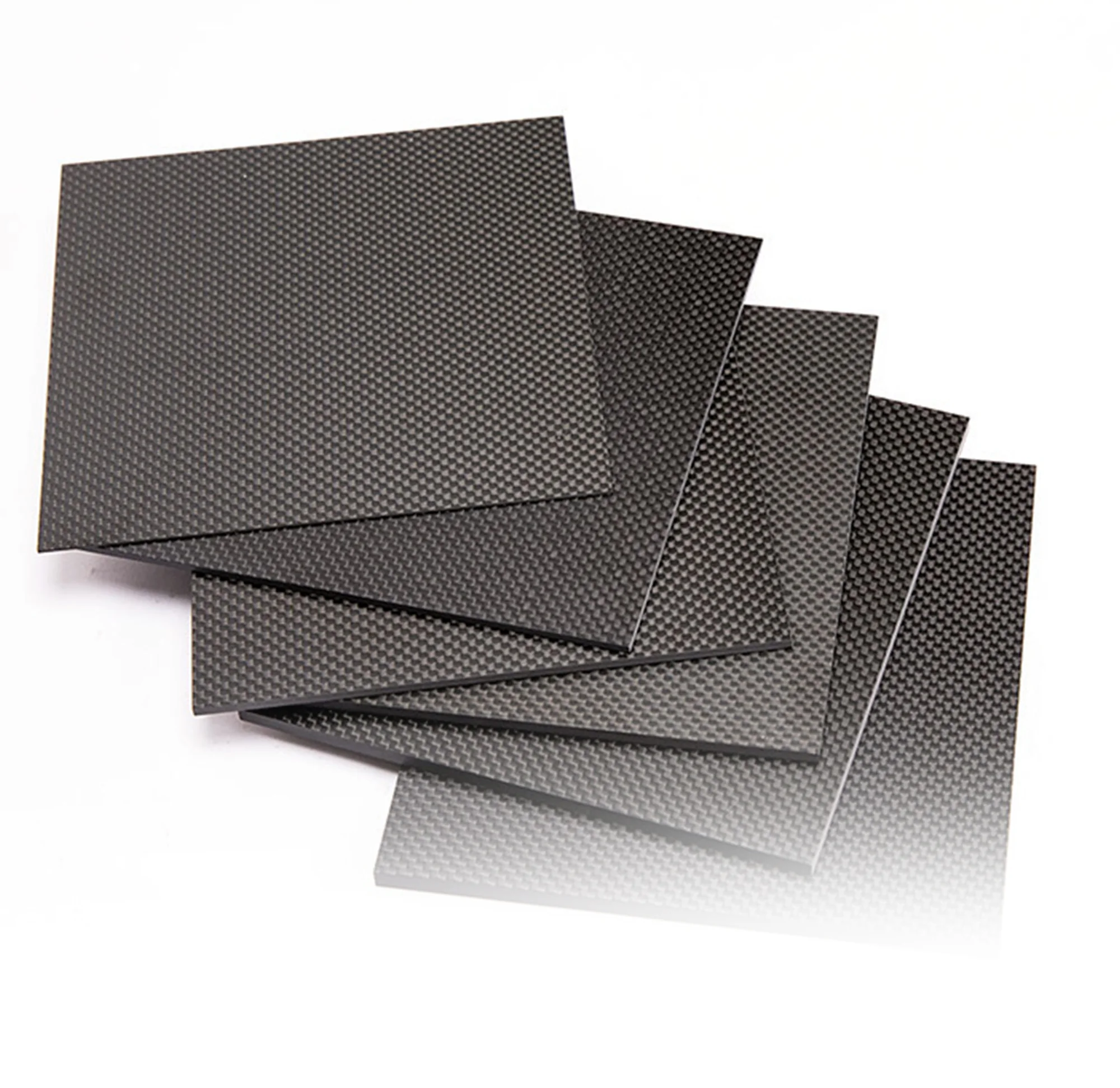
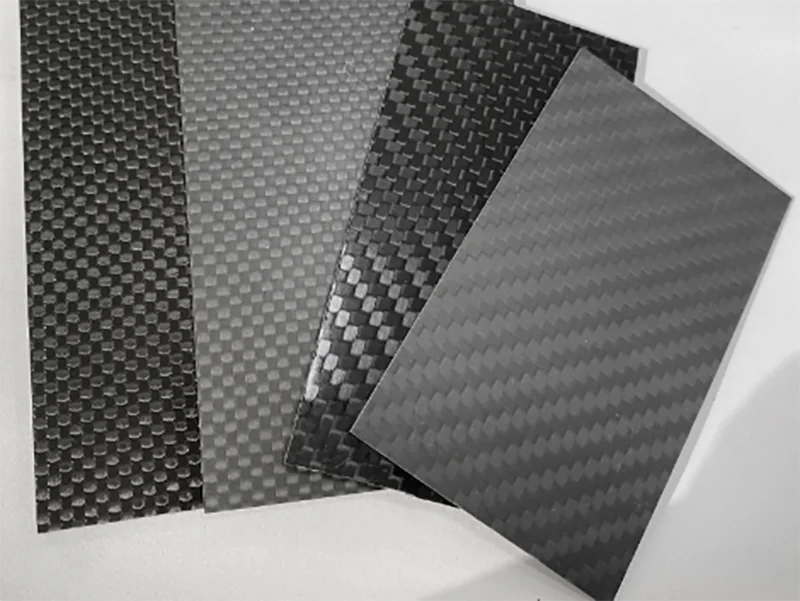
Interlacement can introduce fiber waviness, while some fabric styles conform to a curved tool more readily than others. Those are construction tradeoffs, not an automatic strength ranking. A 2×2 twill cosmetic surface says very little about the number or orientation of hidden structural layers.
Chopped or short-fiber forms
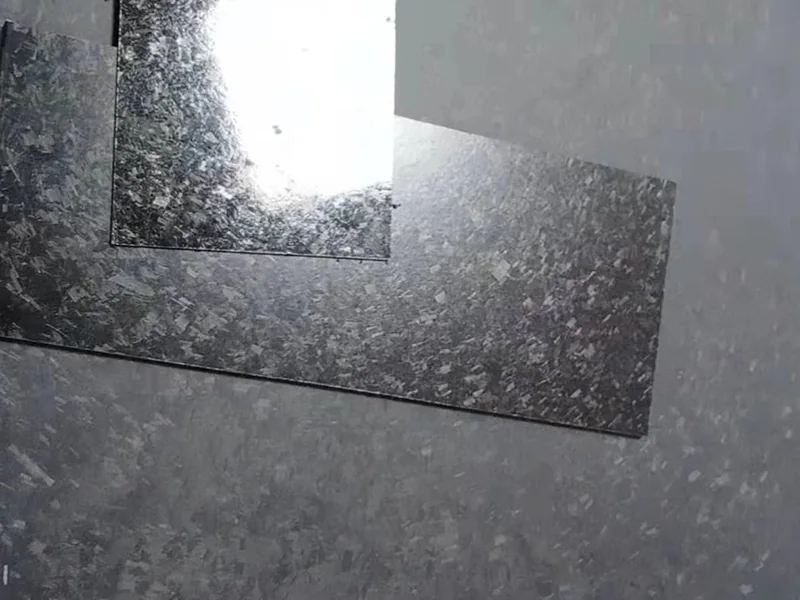
Discontinuous fibers may be used in compound or molding systems whose orientation and performance differ from continuous aligned laminates. A molded short-fiber component should not be presented as equivalent to a continuous-fiber panel solely because both contain carbon. For a chopped-fiber part, fiber length and orientation distribution require their own material characterization; values from a continuous-fiber laminate should not be copied across.
Which description belongs on an engineering drawing?
A useful material note describes the required function, then specifies enough material information to avoid ambiguity. This is more reliable than listing the black weave pattern seen in a reference photograph.
Example: flat panel with a defined load path. State the intended load direction, target stiffness or allowable deflection, design geometry, environmental conditions and acceptable verification method. A material choice can then consider unidirectional and woven reinforcement, appropriate grade and a matrix/layup schedule. The correct laminate is determined by design and validation, not by appearance.
Example: curved cover with primarily visual requirements. Surface finish, ability to conform to curvature, edge treatment, thickness consistency and attachment points may dominate early discussions. A particular fabric can be evaluated for its drape and appearance without claiming that the pattern itself supplies a structural rating.
In either case, a supplier needs an agreed description of material form, component dimensions, expected loads if relevant, resin system requirements, surface expectations and inspection criteria. Grades and fabrics may be offered as alternatives only after the real project requirements are understood.
A five-step comparison checklist
- Separate precursor from grade. Ask whether the chemistry is material to the job or merely background.
- Compare the correct metrics. Distinguish tensile modulus from tensile strength and note measurement direction and test conditions.
- Name the reinforcement format. Tow count, UD tape, textile weave and chopped fiber are different descriptors.
- Specify the finished construction. Matrix, orientation and thickness are necessary for meaningful laminate comparison.
- Request evidence for the actual part. A fiber datasheet, laminate certificate and finished-part test establish different things. Choose evidence appropriate to the risks.
A purely decorative shroud may need a controlled finish and dimensional check, whereas a structural mount may require load cases, analysis and meaningful acceptance testing. This checklist does not imply that every cosmetic component needs a full structural qualification program. It prevents a fiber-label marketing claim from standing in for a specification where performance does matter.
Frequently asked questions
Which type of carbon fiber is the strongest?
The word ‘strongest’ is ambiguous: an individual fiber’s axial tensile strength, a panel’s bending stiffness and a finished assembly’s impact response are different endpoints. Each calls for the corresponding measured evidence. Compare published measurements and the intended use.
Is high-modulus fiber the same as high-strength fiber?
No. Modulus is a measure of stiffness; strength is a failure limit under a stated test. A fiber can be categorized differently on those two axes. Read the exact manufacturer data instead of inferring one from the other.
Is 12K carbon fiber stronger than 3K?
Not necessarily. K-count describes a filament bundle, not a mechanical rating. Relevant performance depends on fiber grade, resin, laminate design, processing and test conditions.
Is twill weave stronger than plain weave or unidirectional fiber?
A weave choice influences handling, drape, crimp and orientation. It does not identify a universally stronger finished part. A known load path and verified laminate design matter more than visible texture.
Does T700 alone specify a finished carbon-fiber sheet?
No. A fiber designation, even when authentic, does not describe all the layers, resin, cure, thickness, dimensions or acceptance conditions of the sheet. Use the complete supplier record and drawing.
From material types to product and process choices
If the task is selecting a finished sheet or planning a drawing-led custom component, turn the classification notes into a request for the appropriate product form or manufacturing review. View Related Product / Capability once the destination pages and actual available configurations are verified.
Related technical guides: What Is Carbon Fiber? · How Carbon Fiber Is Made · Carbon Fiber Strength & Properties.
References
- Japan Carbon Fiber Manufacturers Association — Carbon Fiber Types
- Toray Composite Materials America — Carbon Fiber Products
- Rock West Composites — Carbon Fiber Grades and Tensile Modulus
- Epsilon Composite — Carbon Fiber Grades
Carbon fiber sheets · Custom manufacturing · More carbon fiber guides