
APPLICATIONS / DESIGN PATHWAYS
Carbon Fiber Applications: Find the Right Engineering Path
Carbon fiber applications span different engineering problems. An unmanned aircraft structure, a moving robot tool, a noncritical cabin panel and an industrial fixture require different design evidence and acceptance decisions. Use the industry paths below to sort the functional question before choosing the physical product or manufacturing-service route. The examples describe engineering applications; they are not evidence of a CFRPWorks-certified or commercially available end-use assembly.
Explore applications →Engineering examples do not establish CFRPWorks certification or qualification for a particular end use.
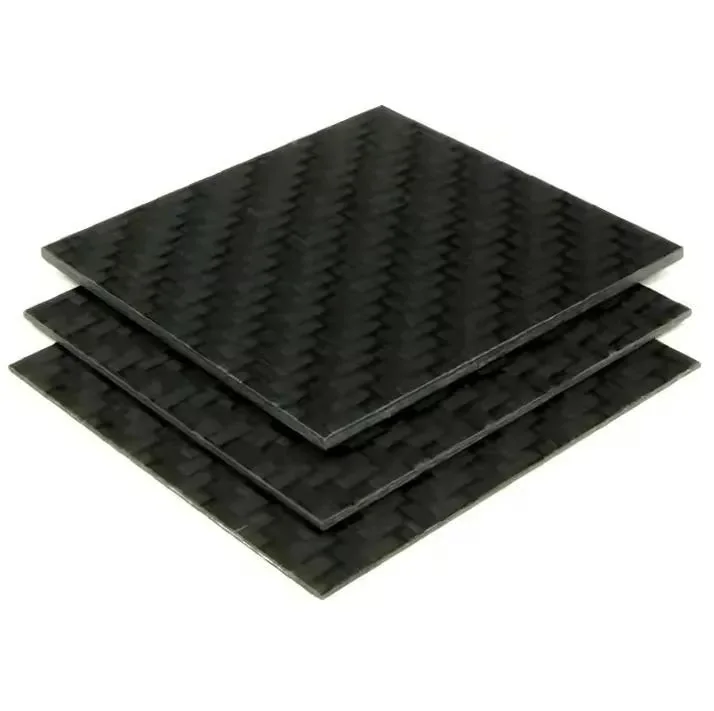
Composite stock photo · material reference only.
Explore applications by the problem you need to solve
01
Drone and UAV structures
Is the limiting factor all-up mass, stiffness under flight loads or vibration at a particular mounting point?
Mission/payload, rotor vibration, bolted interfaces, environmental exposure and repair expectations.
Explore pathway →02
Aerospace systems
Is the part a noncritical interior component, ground-support fixture or a structure subject to a defined qualification program?
Configuration and drawing authority, flight versus ground use, material traceability, verification and approval authority.
Explore pathway →03
Robotics and automation
Does a moving arm or end-of-arm tool need lower inertia without losing positional stiffness?
Move profile, payload, datums, tool-center location, repetitive loading and access for service.
Explore pathway →04
Automotive engineering
Is the task an appearance panel, nonstructural bracket or an engineered load-bearing assembly?
Duty cycle, heat, impact, crash requirements when relevant, metal interfaces and production volume.
Explore pathway →05
Industrial equipment
Would a stiffer, lighter fixture, machine component or enclosure benefit the actual operating cycle?
Alignment, wear, impact, chemicals, fastener access and repeatability requirements.
Explore pathway →Choose the path by load case and acceptance responsibility, not by the marketing name of the finished component. The individual application pages are intended to examine their own constraints. For a physical drone frame or a defined custom component, the separate product-family pages are the appropriate procurement route.
Carbon fiber is a design choice, not a universal material upgrade
Carbon-fiber reinforced polymer (CFRP) combines reinforcing fibers and a matrix, often a resin. Its behavior depends on the finished laminate: fiber orientation, stacking sequence, resin system, section geometry and how loads enter the part. Fiber data by itself does not establish the properties or acceptance of the final laminate, joined structure or assembly.
Before specifying a carbon-fiber part, compare five factors:
• Load direction and stiffness. Identify bending, torsion, compression and local bearing loads. A laminate that is stiff in one direction may still need additional reinforcement around off-axis loads, holes or joints.
• Mass at the assembly level. Compare the finished design, including bonded joints, metal inserts, fasteners and any supporting structure, rather than the density of a raw material alone.
• Operating environment. Temperature range, moisture, chemicals, sunlight and repeated impact can change the material or protective-finish decisions. State the conditions for the actual resin/laminate system under evaluation rather than assuming that all carbon fiber composites behave alike.
• Interfaces and repair. Hole spacing, edge distances, joints, contact with dissimilar metals and field replacement can govern practicality as much as the main panel does.
• Verification. Decide whether acceptance rests on dimensions and appearance, material documentation, coupon testing, first-article inspection or application-specific engineering approval. Different end uses require different evidence.
These checks structure the buyer's requirement review; none is a measured specification for a CFRPWorks part. They help buyers distinguish a promising concept from a released component design.

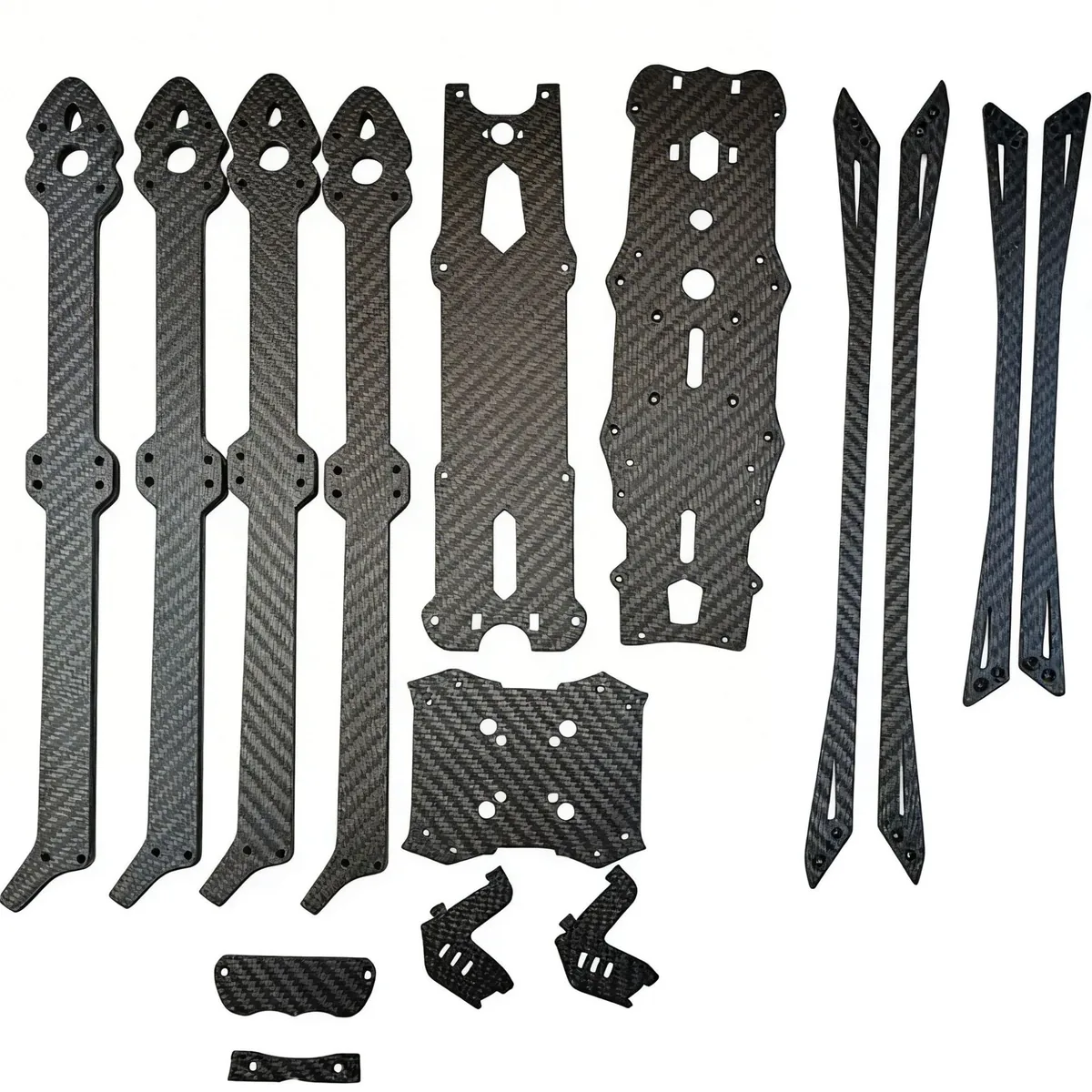
These approved material/process illustrations are not evidence of aerospace, automotive or robotic application approval.
Select a product route separately from the application route
An application may require a flat laminate sheet, a cut profile, a frame component, or a made-to-drawing part. Those physical outcomes should not be conflated with the engineering industry. If you already have a defined part, gather the drawing, laminate requirements and acceptance details for the relevant product-family inquiry. If you have a functional goal but not yet a producible design, describe what is fixed and where a feasibility discussion is needed.
A product photo rarely discloses its laminate, datum scheme, joint design or the process controls needed to reproduce it. Thickness, tool access, minimum edge distances, preferred surface, projected quantity and inspection requirements can affect process feasibility. Ask which operations, tolerances and inspections can be evidenced for this project before treating a design concept as a firm supply commitment.
Prepare an application-level inquiry
A short engineering brief can keep the first discussion focused:
• Application and stage: what the component does, and whether this is concept, prototype or released production.
• Geometry and interface: drawing revision, envelope, key datums, mating components, holes and load-transfer points.
• Functional conditions: expected loads, motion or vibration, operating temperature, exposure and required life where known.
• Material decisions: specified grade/layup/resin, or the choices that are open for evaluation.
• Acceptance and quantity: critical features, documentation/testing requirements, prototype quantity and expected production volume.
• Outstanding decisions: which uncertainties need engineering or commercial confirmation.
Keep requested dates, standards and test evidence explicitly separate from accepted supplier commitments.
Common questions
Are carbon fiber applications all governed by the same material properties?
No. Finished CFRP performance depends on laminate architecture, matrix, part design and load conditions. Compare the end-use assembly and its required evidence, not only the fiber type.
Does an aerospace application example mean a component is aircraft-qualified?
No. General aerospace usage illustrates possible engineering contexts; program-specific certification, material allowables, traceability and part acceptance must be established separately for the intended use.
Should I start with an industry page or a product page?
Start with an industry route when the main question is application fit or functional constraints. Use a product-family route when you know you need a sheet, frame or custom finished part. Use the manufacturing route for process feasibility and drawing-to-part discussion.
What is the next step if the design is still preliminary?
Describe the job to be done, outline the geometry and operating constraints, and identify which design questions remain open. A preliminary brief is useful without pretending that an unfinished design already has a validated bill of materials.
Explore Applications: choose the engineering path above. Discuss Application Requirements: prepare the drawing/revision, operating conditions and acceptance criteria; verify a suitable inquiry and file-transfer channel before sharing confidential designs.
Further reading
• IYRS — Applications of Carbon Fiber Composites — broad industry context.
• CompositesWorld — Carbon Fibers — technical sector coverage.
Plan an application-level discussion
Bring the drawing revision, interface, load case, environmental conditions, acceptance plan, and requested quantities. A qualified component design and timeline require project-specific confirmation.
Discuss application requirements →