
APPLICATIONS / AUTOMOTIVE
Carbon Fiber Automotive Engineering: Evaluate the Vehicle Function First
Carbon fiber in automotive engineering is not one class of product. A closure panel, a battery-adjacent support and a crash-affected cross-member carry different loads, connect to different systems and need different acceptance evidence. Carbon-fiber reinforced polymer (CFRP) may offer a useful stiffness-to-mass balance in some locations, but the benefit depends on laminate design, part geometry, mating materials, production scale and the vehicle program's actual requirements.
This application guide addresses the engineering decisions behind automotive composite concepts. It does not describe a currently qualified CFRPWorks vehicle part, approved chassis or automotive production program. Physical component sourcing and manufacturing-service evaluation have separate project routes.
Illustrative material geometry only; not evidence of a CFRPWorks-qualified automotive component or vehicle program.
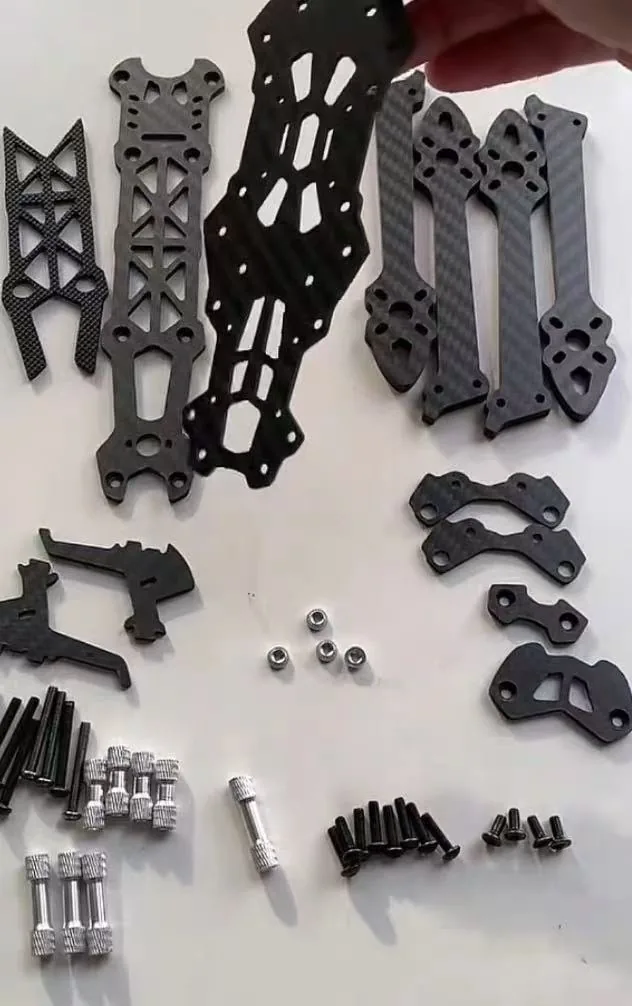
Generic CFRP structural geometry; not an automotive-qualified chassis or crash component.
01 / VEHICLE FUNCTION
Match the material concept to the vehicle's job
Start by dividing an automotive assembly into functions. A lightly loaded panel may be judged by dimensional stability, attachment durability and surface condition; a closure may also transfer loads through hinges and latches. A structural component needs a defined load path, stiffness and fatigue assessment. A crash-related part additionally needs validated impact behavior and an integration plan. A material name alone cannot establish component suitability, still less vehicle-program qualification.
01
Closure or exterior panel
Why evaluate it. Mass and shape stability may matter; local attachments remain critical.
Evidence needed. Surface and environmental exposure, hinge/latch loads, thermal movement, and repair procedure.
02
Cross-member or interior structural support
Why evaluate it. A directional laminate may fit a defined bending or torsion load with less mass.
Evidence needed. Load map, span and interfaces, joint design, fatigue and vehicle-level deflection targets.
03
Battery-adjacent enclosure or support
Why evaluate it. Packaging and mass can motivate a concept review, but enclosure duties vary widely.
Evidence needed. Applicable thermal/fire behavior, electrical safety strategy, impact and seal exposure, joining, and the program's specified acceptance tests.
04
Car frame or chassis engineering concept
Why evaluate it. Carbon-fiber car chassis and car frame designs involve multiple interacting load paths, not a single product material.
Evidence needed. Crash/intrusion strategy, mounting hard points, torsion, joining, full-vehicle validation and controlled process evidence.
05
Assembly fixtures and vehicle-development tooling
Why evaluate it. Dimensional stability or low moving mass may be valuable outside a permanent vehicle part.
Evidence needed. Accuracy, cycles, thermal setting, equipment interface, inspection and repair.
These are categories for design evaluation, not an availability list or proof of production qualification by a particular supplier.
02 / STRUCTURAL ARGUMENT
Assess the assembled structure, not the fiber label
A lighter component can be useful if it meets the same engineering job. For a structural member, compare the composite candidate with the steel or aluminum baseline using common targets: complete installed mass, bending and torsional deflection, attachment loads, fatigue duty, impact or crush requirements, temperature exposure and downstream service access.
Fiber orientation changes how loads travel through a laminate. A design efficient along a chosen axis may need added plies or local reinforcement for off-axis forces, holes and concentrated mounts. A coupon property or generic strength-to-weight comparison cannot prove that an assembled frame satisfies loads at its mounts, transitions or complete vehicle interfaces. When working with chassis and car-frame concepts, the interaction with suspension, body, roof, floor, crash structure and fasteners is a vehicle-system problem.
For nonstructural applications, a metal or other polymer may remain the simpler choice once volume, service conditions and quality controls are included. Treat each use case as a separate decision rather than pursuing the lightest possible laminate everywhere.
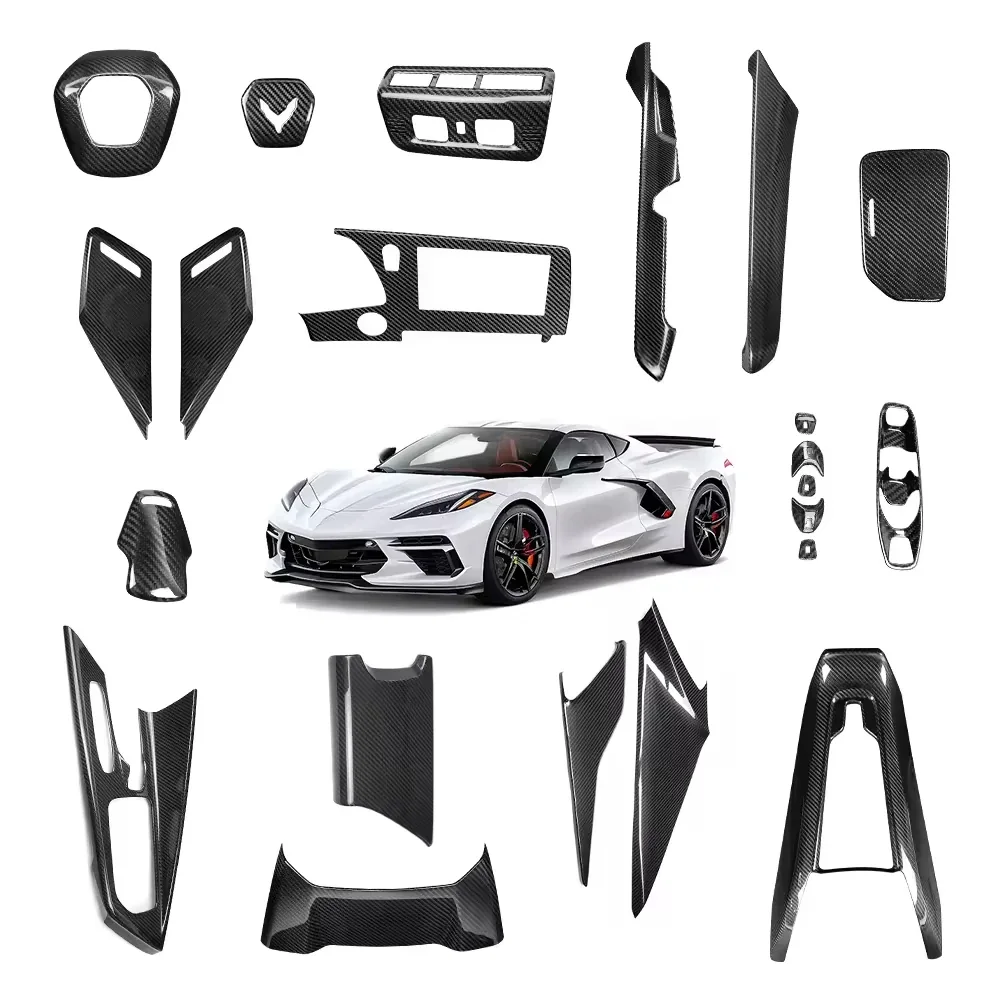
Automotive carbon-fiber component examples shown as application context only; not evidence of a CFRPWorks-qualified vehicle program or production part.
03 / CRASH & JOINTS
Crash behavior and attachments cannot be separated
Overload, crash and post-impact inspection
Vehicle engineering must distinguish ordinary operation from overload, crash and post-impact inspection. A crash-energy management component needs configuration-specific evidence for geometry, laminate, loading rate, progressive crush mode, connections and intrusion behavior. A stiff member that carries service loads may still be unsuitable for a controlled collapse zone without a specific design and test program.
Mixed-material joints and interfaces
The joint to the rest of the vehicle can also dominate performance. Mixed CFRP and metal structures may require attention to mechanical fasteners, bond-line design, peel stresses, corrosion at contacting materials, differential thermal response and access for inspection. A bonded joint qualified for steady load cannot be assumed to pass peel, thermal cycling, moisture, impact or in-service repair requirements.
Acceptance authority
For any safety-related application, the relevant OEM or receiving engineer must define the acceptance protocol. This page cannot substitute an indicative fiber specification for evidence of regulatory compliance, crash acceptance or component qualification.
04 / MATERIAL TRADE-OFF
Carbon fiber versus metals: judge the assembled solution
Metals remain legitimate baselines: their joint design, repair route and formed or machined geometry may satisfy a vehicle requirement with lower total program risk. Many metal parts have mature joining and repair practices, readily machinable mounting interfaces and established supply-chain choices. A composite can change part mass and stiffness, yet interfaces, inserts, joining consumables, finishing and inspection may change both installed weight and program cost.
Metal baseline
Mature joints, service and repair may reduce program risk even when mass is higher.
Composite candidate
Judge finished geometry, laminate, inserts, inspection and whole assembly—not density alone.
Hybrid concept
Metal can handle concentrated bearing or wear interfaces while composite carries suitable span loads.
A hybrid metal-composite concept can sometimes place each material where it has a clear job: metal at concentrated bolt, bearing or wear interfaces and composite across a span whose loads suit a tailored laminate. That remains an engineering option to validate, not proof that every hybrid component is better.
Document both the finished-part comparison and assembly implications. A nominal fiber type alone does not resolve either.
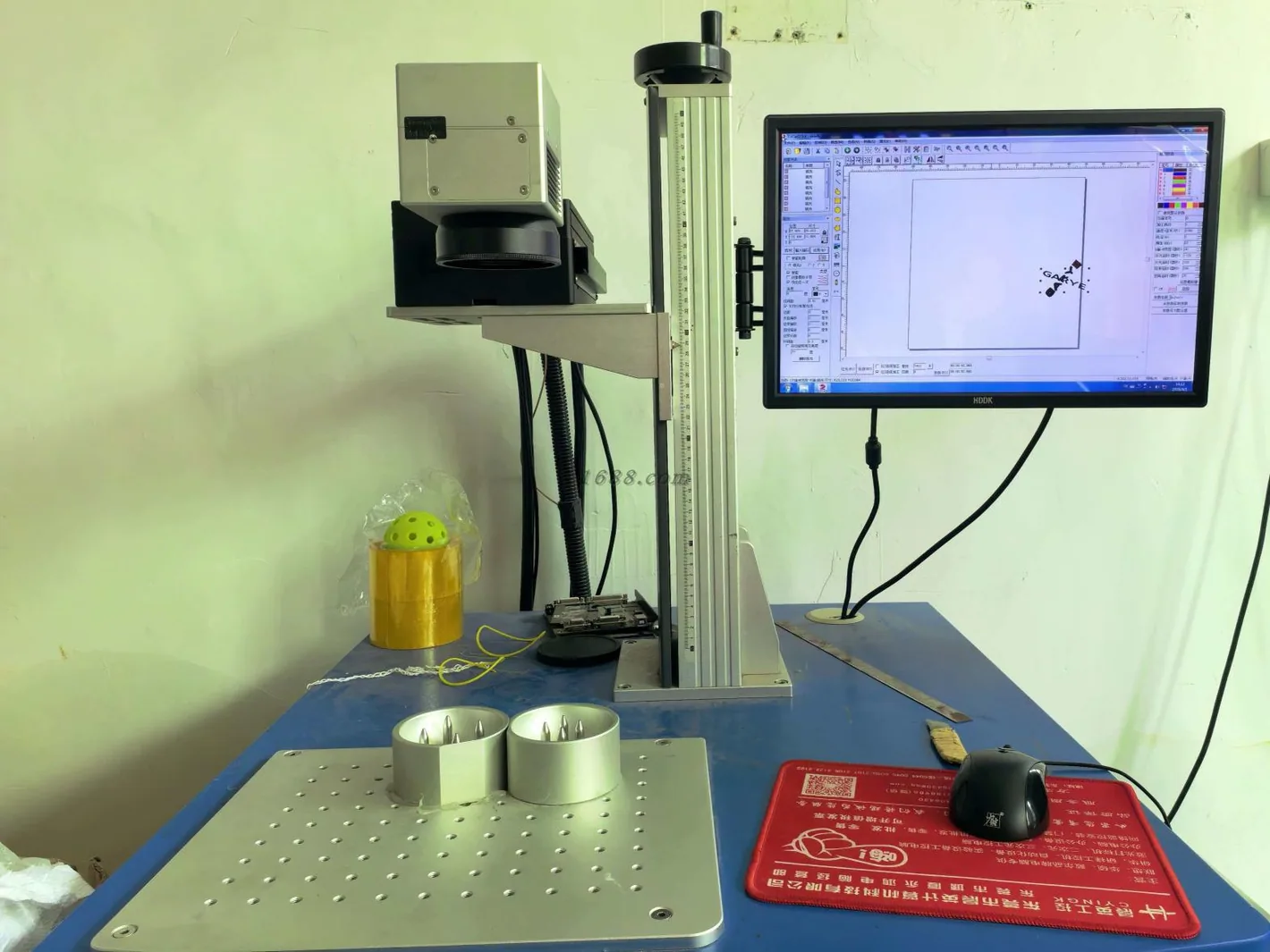
Factory-supplied measurement context. The image does not establish automotive-program qualification or a specific test result.
05 / SCALE, SERVICE & LIFECYCLE
Prototype feasibility is not serial-production evidence
A prototype showing dimensional and load feasibility is not evidence of repeatable serial output under an agreed control plan. For an automotive buyer, feasibility includes expected annual quantity, shape repeatability, material and process controls, tooling economics, joining time, dimensional inspection and how design revisions will be managed. A trial laminate may have very different cost and throughput from a later production route. Do not infer a named supplier's process or throughput from industry examples.
Service and end-of-life requirements matter as well. Composite damage may be less visible than a bent metal part, so inspectability, allowable repair and replacement strategy should be discussed early. Fiber recovery may be feasible in some material systems, but the recovered format, mechanical properties and cost should be compared against the intended reuse—not assumed equivalent to virgin continuous-fiber laminate.
Environmental comparisons depend on fiber and resin production, processing energy, transport, lifetime, repair, vehicle operating conditions and the method for end-of-life accounting. Do not assume every lighter automotive composite decreases whole-life emissions; ask which comparison boundary and data set support the claim.
06 / ENGINEERING INTAKE
What an automotive engineering inquiry should contain
A useful early inquiry separates confirmed requirements from open design choices. The following information helps a prospective technical discussion focus on decisions rather than advertising claims:
01 / Vehicle application
Which assembly and function, such as panel, support, fixture or structural concept? Identify whether it is roadgoing, off-highway, racing or development tooling.
02 / Drawings and interfaces
CAD/STEP files or dimensioned drawings, mating metal components, hole patterns, available assembly envelope and revision control.
03 / Load and environment
Service and peak loads, bending/torsion, crash relevance, vibration/fatigue duty, temperature, fluids, humidity and corrosion exposure.
04 / Acceptance evidence
What deflection, dimensional, joining, impact, aging, fire/thermal, inspection or regulatory tests does the vehicle program actually require?
05 / Commercial program stage
Concept study, prototype or anticipated production volume; intended quantities, required records and confidentiality/IP limitations.
A complete body or chassis concept requires vehicle-system design authority and validation data, not merely a supplier's component drawing. If the test method or material system is not yet selected, state that openly and define the next verification milestone.
07 / NEXT ROUTE
Move the decision to the correct owner page
Use the application page for engineering fit. Route physical component sourcing, manufacturing-service scope and quotation to their separate owners so the search and procurement jobs stay distinct.
Applications overview
Compare other industry/application contexts without changing this page's automotive ownership.
Applications overview →Custom carbon fiber parts
For an existing finished automotive component or drawing-based physical-part need, use the product-family owner.
View custom parts →Custom manufacturing
For process scope, design-for-manufacturing inputs and supplier-service evaluation, use the manufacturing owner.
Review manufacturing →Discuss application requirements
Share the vehicle function, interfaces, loads and required evidence for the next technical step.
Request discussion →08 / FAQ
Frequently asked questions
Where is carbon fiber used in automotive engineering?
Carbon-fiber composites may be evaluated for selected closures, panels, body members, cross-members or development tooling. Each application has its own combination of loading, joining, environment, economics and qualification requirements.
Does a carbon-fiber car chassis automatically perform better in a crash?
No. Crash response depends on complete geometry, laminate and crush design, mounting and the relevant test. A materials comparison cannot establish crashworthiness or road-vehicle compliance.
Does lighter always mean better EV range or a lower carbon footprint?
Not automatically. Vehicle-level mass impacts depend on operating assumptions, and lifecycle outcomes depend on material production, use, repair and end-of-life accounting. Both need a defined comparison.
Can carbon-fiber components be joined to steel or aluminum?
Mixed-material assemblies can use designed mechanical or bonded joints. Load transfer, electrical or galvanic exposure, temperature change, inspection and serviceability must be evaluated for the actual vehicle interface.
Which engineering inputs make an automotive composite inquiry actionable?
Identify its load cases, drawing revisions, joining method, acceptance protocol, program stage and required quality records. For safety-critical or vehicle-approved functions, the responsible program authority determines qualification scope.
DISCUSS APPLICATION REQUIREMENTS
Define the vehicle function before the material answer
Describe the intended vehicle function, assembly interfaces, operating loads and evidence needed for acceptance. Those details clarify whether the next action is a material feasibility review, a controlled prototype or a request for documented component-level qualification; none of those outcomes is promised by the text.